For many businesses, transport costs quietly erode profit. Electric Commuter Motorbikes offer a practical alternative for urban deliveries, staff travel, and short service routes. They move efficiently through crowded streets, use less energy than many fuel-powered motorcycles, and can reduce daily operating noise. Yet the decision should not rely on a showroom test ride alone.
Horace Luke, founder and CEO of Gogoro, has said, “The future of urban transportation is electric.” His view reflects a wider shift in city mobility. However, business owners need evidence, not enthusiasm. This guide will examine purchase price, battery range, charging access, payload capacity, maintenance, rider safety, and local compliance requirements. A motorbike that travels 100 kilometres on paper may perform differently with cargo, hills, rain, and frequent stops. Small details matter. A delivery rider may need a secure phone mount, bright lighting, and a battery swap near the route. A service company may value reliability more than maximum speed.
The strongest choice depends on daily reality. That sounds obvious. It is often missed. Fleet managers should record route distance, charging time, energy costs, downtime, and repair history before replacing existing vehicles. Independent testing and supplier documentation can support better decisions. Still, no model fits every business. Electric Commuter Motorbikes may lower operating costs, but financing, batteries, insurance, and infrastructure can change the calculation. Careful evaluation creates a clearer path toward cleaner, quieter, and more dependable urban transport.
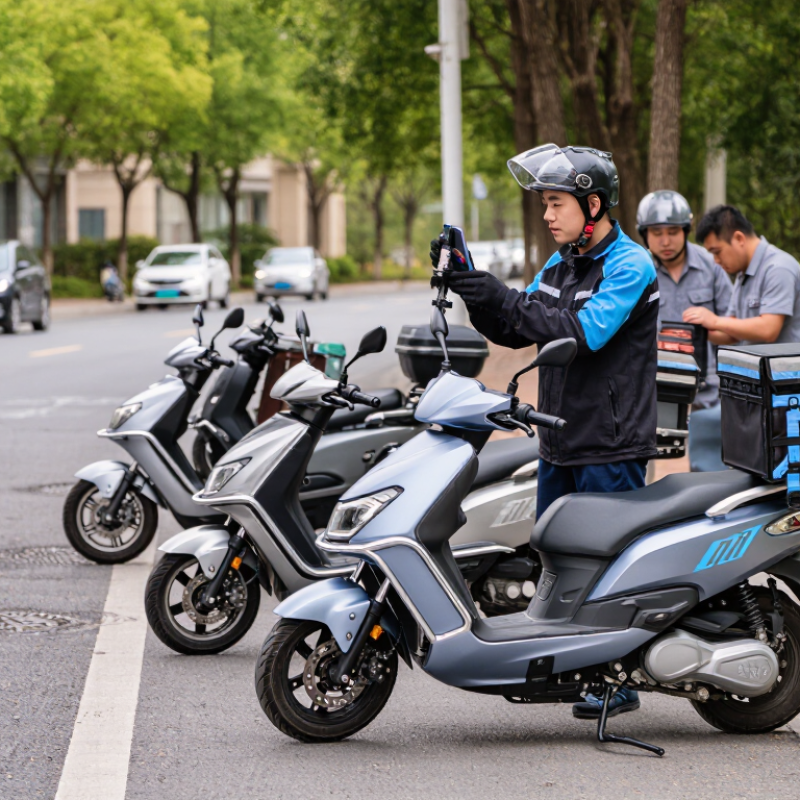
The International Energy Agency (IEA) reports that electric two-wheelers now represent more than half of the global electric-vehicle stock. That figure changes the business conversation. Electric cars receive attention, but daily urban travel often depends on smaller vehicles. For companies managing technicians, couriers, or field sales teams, this matters. A lighter vehicle can enter narrow streets, park near customers, and consume less energy per trip.
Operational trials often reveal the strongest business benefits. Managers should measure electricity costs, charging time, tire wear, maintenance hours, and daily distance. Small details matter. A typical workday may involve repeated stops, short routes, and limited parking. Electric commuter motorbikes can suit this pattern, especially when charging occurs overnight at a secure workplace. Their simpler drivetrains may also reduce routine service needs, although battery replacement costs require careful planning.
The IEA figure is powerful, but it needs context. Vehicle definitions, regional incentives, electricity prices, and charging access can change the return. A fleet that looks efficient on paper may struggle during rain, winter, heavy loads, or long shifts. That is an uncomfortable limitation. Rider training, protective equipment, legal compliance, and battery safety also require investment. Our assumptions are often too optimistic. Companies should pilot several routes, record real energy use and downtime, and collect rider feedback before expanding the fleet.
Why Choose Electric Commuter Motorbikes for Your Business?
For daily business travel, maintenance often hides a major operating cost. Electric commuter motorbikes use fewer moving parts than combustion models. The U.S. Department of Energy explains that electric vehicles avoid oil changes, spark-plug replacement, and many exhaust-system repairs. Regenerative braking can also reduce friction-brake wear during stop-and-go routes. That matters when riders repeatedly travel between offices, warehouses, and customer sites.
Consumer Reports estimated that electric vehicle owners could spend about half as much on maintenance and repairs over a vehicle’s lifetime. The estimate covers cars, not motorbikes. Still, the mechanical principle is relevant. Fewer engine components mean fewer parts exposed to heat, vibration, and lubricant breakdown. A fleet manager may see savings through simpler inspections, fewer workshop visits, and less downtime. Small savings become noticeable across ten or twenty vehicles.
The numbers are not perfectly transferable. Battery condition, tire wear, charging equipment, and local labor rates still affect total cost. The DOE also notes that battery replacement is a significant long-term expense, although failures are uncommon in properly managed vehicles. Businesses should track energy use, tire changes, brake servicing, and battery performance for twelve months. Real records beat optimistic spreadsheets. That process may reveal an uncomfortable result: the cheapest model to buy is not always the cheapest model to operate.
| Cost or Maintenance Dimension | Battery-Electric Commuter Motorbike | Comparable Gasoline Motorbike | Business Cost Implication |
|---|---|---|---|
| Powertrain complexity | An electric drive system has fewer moving parts than an internal-combustion engine. It still has components such as bearings and, on some models, reduction gearing. | An internal-combustion engine has more routine service components, including engine and fuel-system parts. | Fewer engine-related service items can mean fewer scheduled maintenance tasks. |
| Engine oil and oil filter | No engine oil or engine-oil filter changes for the electric drive motor. | Engine oil and filter changes are typically required at intervals specified by the vehicle manufacturer. | Potential savings in oil, filters, labor, and service downtime; actual savings depend on the model and service schedule. |
| Spark plugs and exhaust system | No spark plugs or engine exhaust system in a battery-electric powertrain. | Spark plugs and exhaust-system components may require inspection, service, or replacement. | These gasoline-engine maintenance tasks do not apply to a battery-electric motorbike. |
| Braking system | Regenerative braking can return energy to the battery and may reduce use of friction brakes. | Braking relies on friction brakes during deceleration. | Brake wear depends on route, rider behavior, load, and vehicle design; do not assume a fixed replacement interval. |
| DOE maintenance-cost benchmark | DOE-published light-duty vehicle benchmark: approximately 6.1 cents per mile for scheduled maintenance. | DOE-published light-duty vehicle benchmark: approximately 10.1 cents per mile for scheduled maintenance. | The benchmark is about 4.0 cents per mile lower for EVs, but it is not a motorbike-specific estimate. |
| Total cost of ownership for a fleet | Compare purchase price, electricity, maintenance, insurance, charging equipment, battery warranty, and resale value. | Compare purchase price, fuel, maintenance, insurance, and resale value. | Calculate using your fleet’s annual distance, local energy prices, service quotes, and expected ownership period. |
Source and scope: U.S. Department of Energy (DOE), Alternative Fuels Data Center and Vehicle Technologies Office, for general electric-vehicle maintenance guidance and the light-duty maintenance-cost benchmark. The 6.1¢/mile and 10.1¢/mile figures are vehicle-category benchmarks, not measured commuter-motorbike costs. Verify maintenance schedules and total costs against each motorbike manufacturer’s documentation and local operating conditions.
A practical route review should begin with daily mileage, not advertised battery range. Map every stop, detour, hill, and return trip. A 70-kilometer route may become 85 kilometers during traffic or rain. Leave a realistic reserve.
Payload changes the result quickly. A rider carrying tools, parcels, or food adds weight throughout the day. During a delivery trial, record the rider’s weight, cargo weight, speed, and road conditions. Compare battery use after identical routes. Small details matter.
Charging time must fit the working schedule. A battery that needs six hours may suit overnight operations, but not two daily shifts. Check whether charging occurs at the depot, at home, or between routes. Measure the actual charging period, including setup and cooling time.
Our first range estimate was too optimistic because we ignored steep streets and repeated stops. That mistake exposed a useful lesson. Test the motorbike with real payloads, not an empty vehicle. Measure honestly.
Daily mileage also reveals replacement needs. If a route regularly exceeds the usable range, consider a spare battery or a shorter service zone. However, extra batteries add cost, weight, and storage requirements. Record energy consumption over several weeks before changing the fleet plan. Weather can distort one test, so one sunny day is not enough.
Electric commuter motorbikes can make fleet emissions measurable, not merely “greener.” The ICCT’s 2021 lifecycle study found that battery-electric passenger cars sold in Europe produced 66–69% fewer greenhouse-gas emissions than combustion cars. The comparison included manufacturing, electricity, fuel production, and use.
Motorbike results will differ.
A fleet manager should apply the same lifecycle logic to each route. Record battery capacity, charging electricity, annual mileage, and replacement schedules. A 60-kilometre daily route creates a clear baseline. Compare its electricity use with petrol consumption from equivalent vehicles. The International Energy Agency reports that electric two- and three-wheelers remain among the most widely deployed electric road vehicles. Their smaller batteries can reduce manufacturing impacts, although frequent charging may increase operational demand.
Electricity quality changes the answer. A depot using renewable power may achieve larger reductions than one supplied by a carbon-intensive grid. The ICCT data also show this geographic effect: lifecycle benefits are generally stronger where electricity has lower emissions. Do not copy passenger-car percentages without adjustment. That would be convenient, but technically weak.
Real fleet evidence matters. Measure charger losses, cold-weather range, battery replacements, and rider behaviour. One overlooked detail is idling: combustion motorcycles may waste fuel during repeated delivery stops, while electric models use little energy when stationary. Maintenance emissions also need attention, including tyres and replacement parts. The assessment may expose smaller savings than expected. That is useful. Reliable reporting includes uncertainty, not just attractive percentages.
Lifecycle emissions assessment for a 100-bike fleet over five years
Illustrative result: Under the assumptions shown, switching the fleet reduces lifecycle emissions by 400 t CO₂e (53%). Lifecycle factors include vehicle and energy production as well as use.
Scenario assumptions: 100 bikes, 20,000 km per bike per year, five years of operation; 75 g CO₂e/km for petrol and 35 g CO₂e/km for electric. These are example inputs, not universal or quoted ICCT measurements. For a decision-grade estimate, replace them with market- and vehicle-specific factors from ICCT lifecycle data.
A fleet rollout should begin with safety checks, not a charging map. UNECE Regulation No. 136 sets electric powertrain safety requirements for L-category vehicles, including motorcycles. Ask suppliers for clear documentation on battery protection, electrical isolation, and fault warnings.
The IEA’s Global EV Outlook 2024 estimates that about 10 million electric two- and three-wheelers were sold worldwide in 2023.
That growing market makes consistent fleet checks more important, not less.
Telematics can turn scattered vehicle signals into practical maintenance tasks. Track battery state of charge, temperature alerts, diagnostic codes, mileage, and charging interruptions. Set service triggers before a warning light becomes a roadside delay.
Small details matter. A dashboard is not a mechanic. Pair alerts with scheduled inspections and a named person responsible for follow-up.
Review weekly reports for repeated faults, low-charge returns, and vehicles spending too long off-route. Then adjust charging windows and spare-vehicle allocation using actual shift patterns.
Data is useful, but imperfect: missed connections, faulty sensors, and rushed rider reports can distort the picture. Record those gaps, verify unusual readings, and compare downtime before and after deployment.
They can handle narrow streets, frequent stops, and tight parking. Smaller batteries may also use less energy per trip. Not every route fits.
Map stops, hills, detours, and the return trip. A planned 70-kilometer route could reach 85 kilometers in traffic or rain. Keep a realistic reserve.
Tools, parcels, and food add weight. Test the same route with realistic loads and record battery use. Empty-vehicle tests mislead.
Match charging time to work shifts. A six-hour charge may suit overnight use, but not two daily shifts. Include setup and cooling time.
Track electricity, charging time, tire wear, maintenance hours, and downtime. Record daily distance, too. Small details add up.
They may, but results depend on electricity sources, battery replacements, and mileage. Measure comparable routes and energy use. Avoid copying car figures.
Cold weather, rain, steep streets, heavy loads, and long shifts can reduce usable range. Our first estimate was too optimistic. We missed repeated stops.
Pilot several routes for weeks. Gather rider feedback and check charging access, safety, and maintenance needs. One sunny day is not enough.
Electric Commuter Motorbikes can offer businesses a practical way to modernize urban delivery and travel fleets. Their growing role in the electric-vehicle market points to increasing suitability for everyday commercial use, while fewer moving parts may help reduce routine maintenance needs and associated costs. To determine whether they fit a particular operation, businesses should compare battery range, payload capacity, charging time, and typical daily mileage against the routes vehicles actually travel.
A sound fleet decision also considers emissions across a vehicle’s full lifecycle, rather than focusing only on use on the road. Careful route planning, appropriate charging arrangements, and dependable safety practices can support efficient deployment. Telematics can help managers monitor vehicle use, identify maintenance needs, and reduce avoidable downtime. By weighing total costs, operational requirements, emissions, and uptime together, businesses can assess whether electric commuter motorbikes are a suitable long-term choice for their fleet.