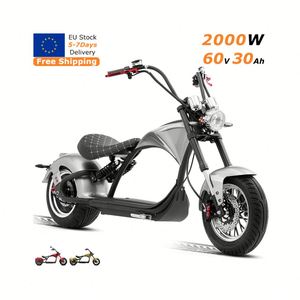
Explore our flagship lineup of brushless hub motor motorcycles, heavy-duty commercial scooters, and high-voltage energy storage solutions engineered for global compliance and demanding road conditions.

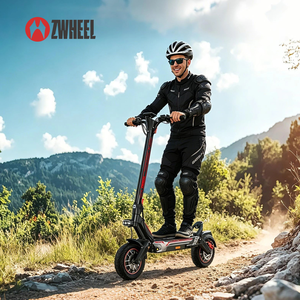
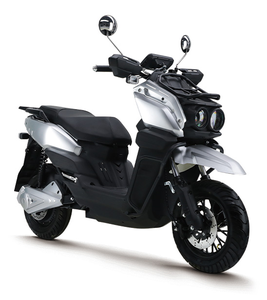
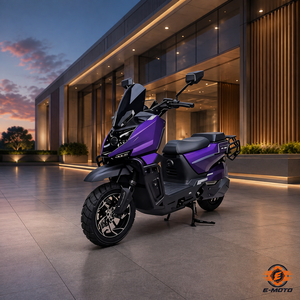
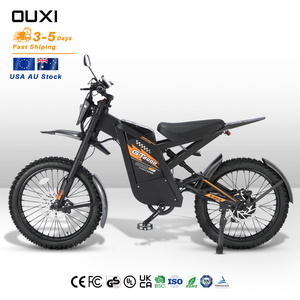
An In-Depth Engineering and Sourcing Guide for Commercial Importers, Fleet Managers, and Regional Distributors.
As global urban transportation undergoes a structural transition toward decarbonization, global procurement directors face increasing pressure to source reliable, compliant, and cost-efficient zero-emission platforms. Among two-wheeler electric architectures, Brushless Direct Current (BLDC) Hub Motors have emerged as the gold standard for urban micro-mobility and commercial delivery fleets. By integrating the propulsion mechanism directly inside the wheel hub, manufacturers eliminate complex mechanical drivelines—including drive belts, chains, tensioners, and secondary gearboxes—resulting in an immediate 15% to 22% increase in net electromechanical efficiency.
Our OEM/ODM manufacturing ecosystems, anchored by state-of-the-art production facilities spanning specialized assembly lines on Sue Asil Road and corporate headquarters in Gulberg III, Lahore, represent the pinnacle of regional EV engineering. We operate under strict ISO 9001:2015 Quality Management Systems, enforcing rigorous end-of-line (EOL) testing protocols for every batch of export-ready hub motor motorcycles.
Every vehicle in our catalog undergoes rigorous compliance audits to secure full CE marking, EN 15194 compliance, and EEC (L1e-B / L3e-A1) homologation, allowing seamless registration and sale across European and global markets.
We deploy premium Lithium Iron Phosphate (LiFePO4 / LFP) chemistry alongside intelligent Smart BMS monitoring systems, ensuring stable thermal execution even in severe operational climates exceeding 45°C ambient temperatures.
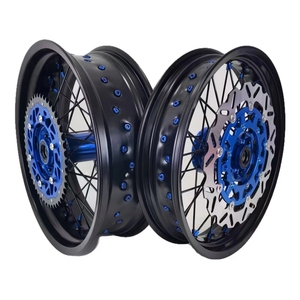
From customizable rim options (spoke vs. lightweight alloy) to dual-battery slot modifications and CAN-bus IoT telemetry integration, our factory provides end-to-end bespoke production tailored to your market specifications.
A comparative industrial evaluation to assist procurement officers in choosing the optimal drivetrain architecture for urban and commercial fleets.
| Performance Dimension | Direct-Drive BLDC Hub Motor | Geared Mid-Drive Motor | Conventional Petrol (125cc ICE) |
|---|---|---|---|
| Drivetrain Efficiency | 90% - 94% (Direct Wheel Drive) | 82% - 87% (Chain/Belt Loss) | 18% - 24% (Thermal Losses) |
| Scheduled Maintenance | Ultra-low (No chain, oil, or belts) | Moderate (Chain tension & oiling) | High (Oil, spark plugs, clutch) |
| Thermal Stability | High (Alloy hub heat-dissipation) | Moderate (Enclosed casing) | Low (High heat output) |
| Ingress Protection | Hermetically Sealed IP67 / IP68 | IP65 Standard Casing | N/A (Exposed Intake/Exhaust) |
| Net Operating Cost | ~$0.005 / km | ~$0.009 / km | ~$0.045 / km |
| Expected Service Life | 50,000+ Kilometers | 30,000 Kilometers | Overhaul needed at 25k KM |
Key technological shifts that global distributors and municipal fleet buyers must navigate over the next half-decade.
Global regulatory bodies, particularly in the EU and North America, are mandating battery supply chain transparency and higher thermal safety standards. Traditional Nickel Manganese Cobalt (NMC) chemistries are increasingly being replaced by Lithium Iron Phosphate (LFP) due to LFP’s non-combustible nature, superior thermal stability in tropical climates, and extended cycle life (exceeding 3,000 to 3,500 full depth-of-discharge cycles). Our export platforms lead this transition by incorporating modular LFP packs paired with intelligent battery management systems.
Modern commercial procurement requires real-time vehicle monitoring. Future-ready hub motor motorcycles are now factory-fitted with integrated IoT modules offering CAN-bus telemetry, remote GPS tracking, over-the-air (OTA) firmware diagnostics, geofencing, and NFC keyless ignition. Fleet operators can optimize delivery routes, prevent unauthorized vehicle usage, and monitor real-time battery State-of-Health (SoH) across thousands of deployed units.
While 48V systems remain adequate for lightweight mobility, high-performance urban commuting and heavy utility logistics are rapidly shifting toward 60V and 72V platforms. Higher system voltage reduces current draw across internal wiring harnesses, mitigating resistive copper heating (I²R losses) and enabling faster charge acceptance rates. This shift allows 2000W+ hub motors to achieve sustained speeds of up to 80 km/h without thermal throttling.
Clear, authoritative answers to common commercial, engineering, and regulatory questions from international buyers.
Whether you are expanding a regional retail network, launching a delivery fleet, or sourcing CE-certified electric two-wheelers for government tenders, our engineering team is ready to deliver tailored solutions.