An authoritative operational guide for B2B importers, global distributors, fleet operators, and OEM brand buyers looking to source verified high-performance electric motorcycles, scooters, cargo ebikes, and specialized watercraft components.
The global transition to sustainable urban micro-mobility has placed Chinese OEM/ODM original equipment manufacturers at the epicenter of electric two-wheeler (E2W) engineering. As international regulations tighten around carbon footprints and urban congestion charges mount, commercial logistics fleets, ride-sharing operations, and personal commuter networks require robust, heat-tolerant, and high-energy-density light electric vehicles (LEVs).
China's electric two-wheeler supply chain accounts for over 80% of global manufacturing capacity. However, selecting premier Tier-1 suppliers demands strict evaluation of core technology integrators: Brushless DC (BLDC) hub motors, Permanent Magnet Synchronous Motors (PMSM), Lithium Iron Phosphate (LiFePO4 / LFP) battery cell chemistry, field-oriented Vector Controllers (FOC), and robotic frame fabrication. Leading manufacturers have transitioned from assembly-only setups to fully automated industrial clusters integrating SMT PCB placement, automated battery pack laser welding, dyno stress testing, and hardware-in-the-loop (HIL) simulation.
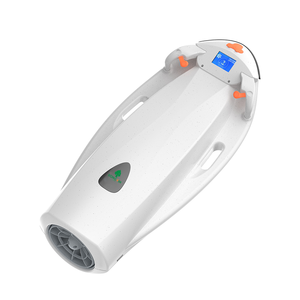
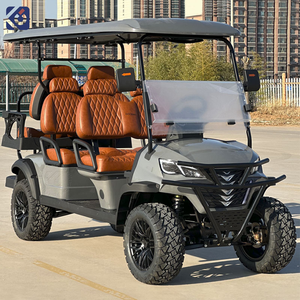
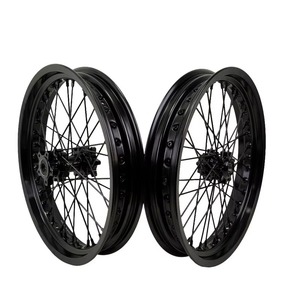
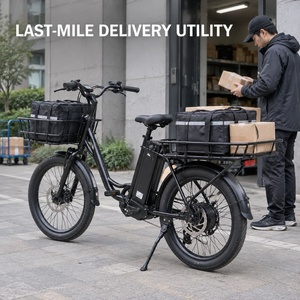
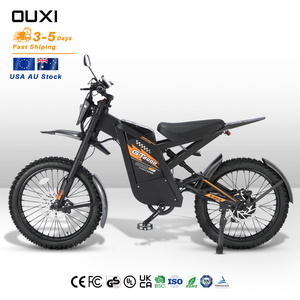
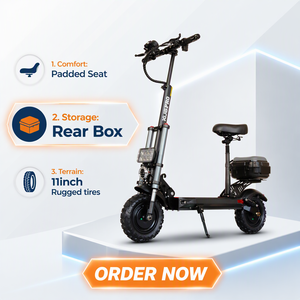
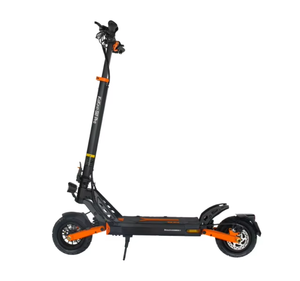
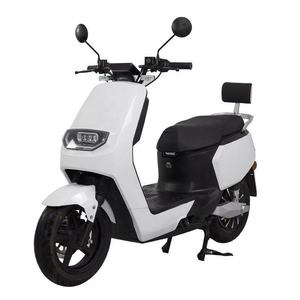
Direct factory catalog showcasing commercial delivery ebikes, high-speed off-road motorcycles, urban commuters, passenger sight-seeing carts, and customized components.
Information Gain Analysis: Understanding component-level specifications that differentiate tier-1 export factories from basic domestic assemblers.
Top Chinese factories offer grade-A Lithium Iron Phosphate (LiFePO4) cell options capable of over 3,000 charge cycles at 80% DOD. LFP exhibits non-combustible characteristics even under nail penetration tests, making it ideal for high-temperature tropical export zones exceeding 45°C ambient heat.
Field-Oriented Control (FOC) sinusoidal wave controllers provide smooth torque response, lower thermal generation, and efficiency gains of up to 15% compared to square-wave controllers. Integrated CAN-Bus 2.0B protocols enable real-time telemetry readout for commercial delivery fleet managers.
From 500W city-scooty platforms up to 2000W / 3000W heavy-duty motor configurations, high-flux neodymium magnets (N45SH class) resist demagnetization at temperatures up to 150°C, ensuring sustained hill-climbing power under 150kg+ payload capacities.
Before issuing requests for quotation (RFQs), procurement officers must cross-examine battery and frame engineering standards against operating environments:
| Specification Class | Standard Entry Commuter | Heavy Commercial Delivery | High-Speed OEM Dirt / Sport |
|---|---|---|---|
| System Voltage Platform | 48V / 60V Architecture | 60V / 72V Heavy Platform | 72V / 96V High Voltage System |
| Battery Chemistry | Lead-Acid or Standard NMC 18650 | Grade-A LFP (LiFePO4) Prismatic | High-C NMC 21700 Pouch Cells |
| BMS Protection Rating | Passive Balancing (30A–40A) | Active Smart BMS with CAN/NFC (80A+) | Programmable High-Current BMS (150A+) |
| Chassis Construction | Standard Carbon Steel Tubing | Reinforced Dual-Cradle Steel Frame | CNC Machined Aircraft Alloy / Magnesium |
| Braking Hardware | Front Disc / Rear Drum | Dual-Piston Hydraulic Disc + CBS | Four-Piston Floating Calipers + EBS |
| Target Cycle Life | 600–800 Cycles | 2,500–3,500 Cycles | 1,200–1,500 Cycles |
Market insights into emerging manufacturing practices, regulatory shifts, and technological disruptions driving China's two-wheeler export leadership.
Commercial last-mile logistics fleets are shifting from fixed plug-in charging systems to standardized, hot-swappable battery enclosures. Forward-looking Chinese suppliers are standardizing connector pinouts (such as Chogori or Anderson high-current plugs) and adopting unified casing dimensions for 48V 24Ah and 60V 30Ah packs. This allows fleet operators to maximize vehicle uptime from 65% to 98% by removing downtime during 4-to-6 hour recharge cycles.
In response to varying import tariffs, country-of-origin policies, and national EV transition subsidies across South Asia, Southeast Asia, South America, and Africa, top-tier Chinese manufacturers now structure product lines specifically for Completely Knocked Down (CKD) and Semi-Knocked Down (SKD) shipping. By engineering snap-fit wiring harnesses, pre-calibrated controllers, and jig-aligned frame kits, export partners reduce shipping volume costs by up to 60% per container while empowering local assembly plants to comply with local content percentage rules.
Modern electric two-wheelers are no longer isolated mechanical assemblies; they are connected IoT endpoints. Leading Chinese manufacturers are integrating 4G LTE IoT modules, GPS tracking, bluetooth app connectivity, and Near Field Communication (NFC) keyless startup directly into the main wiring harness. Remote over-the-air (OTA) firmware updates enable manufacturers to adjust torque curves, diagnose BMS cell imbalances, and lock stolen rental vehicles remotely via cloud dashboards.
For high-performance off-road e-dirt bikes and premium urban scooties, carbon steel frames are being replaced by gravity die-cast aluminum and CNC-machined magnesium alloy components. This structural shift reduces kerb weight by 25–35% without compromising torsional rigidity, resulting in longer range per kilowatt-hour (kWh) and superior handling dynamics.
Why global brands, regional distributors, and government procurement programs trust established Chinese manufacturing hubs.
From frame tube bending, robotic TIG welding, and automated cathodic electro-coating (ED) to final dyno road testing, complete control over production ensures zero reliance on third-party sub-assemblers and guarantees strict quality compliance.
All export series are built to meet or exceed rigorous international regulatory standards, including EEC / CoC for European road homologation, DOT / EPA for North America, CE, UN38.3 battery transport safety, and ISO9001 quality management systems.
Engineered and field-tested under high-temperature regimes exceeding 40°C+, reinforced thermal dissipation fins on controllers and heat-isolated battery compartments prevent thermal throttling during continuous heavy-duty hill climbing and delivery runs.
Whether you require private-label branding on established vehicle chassis or ground-up engineering for custom delivery platforms, our streamlined factory workflow guarantees fast time-to-market:
| Phase | Development Milestone | Deliverables & Verification |
|---|---|---|
| 01. Conceptualization | Requirements gathering & market spec positioning | Powertrain calculation, initial 2D/3D CAD renders, cost estimation |
| 02. Prototype Build | Functional mock-up & structural validation | 3D-printed fairings, CNC frame fabrication, initial dyno test report |
| 03. Testing & Homologation | Vibration, waterproofing, and fatigue stress testing | IP67 water ingress pass, 100,000-cycle frame fatigue certificate, EEC/DOT filing |
| 04. Mass Production | Automated assembly line manufacturing | Online inspection, 100% full-load road testing, CKD/SKD packing optimization |
Clear answers regarding MOQs, customs documentation, battery safety certifications, freight packaging, and warranty terms for two-wheeler procurement.
We work directly with certified Tier-1 manufacturing facilities featuring complete fabrication lines, robotic welding stations, and specialized battery pack assembly workshops. This direct factory relationship guarantees wholesale pricing, direct engineering support, and full traceability for spare parts supply.
Standard factory MOQs start at 20 units (a 20-foot GP container load) for existing production models. For custom OEM paint schemes, logo integration, and tailored wiring configurations, the baseline MOQ is typically 50 to 100 units depending on chassis complexity.
All lithium-ion (LFP/NMC) battery configurations shipped with our vehicles strictly comply with UN38.3 (transportation testing), MSDS (Material Safety Data Sheet) documentation, and dangerous goods (DG) sea-freight packaging standards (UN3481 rating) for safe container customs clearance.
We provide a 1%–2% free wearing spare parts package (including brake pads, throttles, light assemblies, and relays) with every container order. Key components such as motors, controllers, and battery packs are covered under a 12 to 24-month manufacturer warranty with factory component replacement.
Yes. CKD and SKD packaging options are available across our entire electric bike and scooter lineup. CKD shipping increases container loading capacity by up to 2.5 times compared to CBU (Completely Built Up) units, significantly reducing freight charges per unit.
Standard production lead time for a 40-foot High Cube container (approx. 75–100 CBU units or 200+ CKD units) is 25 to 35 calendar days following deposit confirmation and artwork approval.
Download our complete 2026 factory wholesale catalog, technical spec sheets, and volume pricing schedules directly from our sales engineering team.