Engineered by leading Chinese OEMs for global distributors, off-road enthusiasts, and commercial logistics fleets.
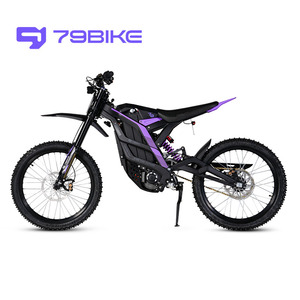
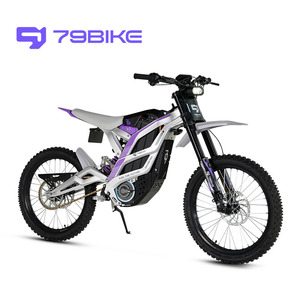
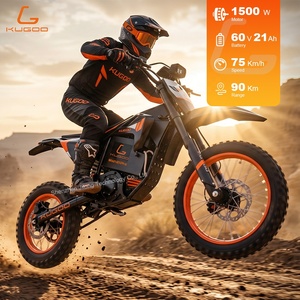
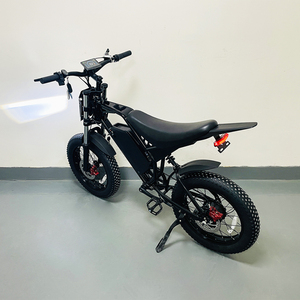
Direct factory engineering, thermal-stable battery architectures, and streamlined global distribution logistics.
Utilizing high-tensile aircraft-grade aluminum alloy and robotic TIG welding, our high-power frames withstand extreme off-road motocross strain up to 12kW peak loads without structural failure.
Integration of Automotive-grade LiFePO4 (LFP) and high-rate 21700 NMC cells backed by smart CAN-Bus BMS. Guaranteed thermal safety in tropical climates exceeding 45°C ambient temperatures.
Custom-tuned Field Oriented Controllers (FOC) deliver butter-smooth throttle control, regenerative braking efficiency up to 18%, and instantaneous 410N.m wheel torque acceleration.
Direct supply options from overseas stock bases in the European Union, UK, and North America. Reduce procurement lead times from 45 days down to 3–7 business days for regional dealers.
From custom frame geometry, private labeling, brand colorways, to specific component pairings (KKE shocks, Magura/Brembo hydraulic disc brakes, IoT GPS modules), we turn your concept into mass production.
Our production facilities maintain strict compliance with ISO9001, CE, EEC (L1e/L3e Homologation), DOT, and EN15194 regulations, ensuring seamless customs clearance globally.
The global light electric vehicle (LEV) industry is undergoing a structural transition. Demand has rapidly expanded beyond traditional 250W–750W urban pedal-assist commuter bicycles into high-voltage, high-power domain electric dirt bikes, heavy-duty commercial delivery vehicles, and cross-country electric motorcycles capable of peak outputs ranging from 5,000 Watts to 12,000 Watts. As the world’s hub for electric mobility hardware, China’s industrial supply chain manufactures over 80% of the world’s core electric two-wheeler components. However, discerning global importers, B2B fleet operators, and brand owners must look beyond surface specifications to identify genuine tier-1 original equipment manufacturers (OEMs) capable of delivering long-term vehicle reliability, structural integrity, and regulatory compliance.
When operating electric motorcycles generating torque levels up to 410 N.m at the rear wheel (such as the 72V 12kW off-road platforms), standard bicycle-grade aluminum tubing is fundamentally inadequate. Dynamic stress points near the head tube junction, bottom bracket, and rear swingarm pivot experience extreme torsional strain during off-road jump landings and rapid acceleration bursts.
Tier-1 Chinese e-bike manufacturers employ advanced metalworking techniques, including:
| Vehicle Class / Category | Typical Voltage & Wattage | Battery Chemistry | Peak Torque / Top Speed | Primary Commercial Application |
|---|---|---|---|---|
| Off-Road Motocross / Dirt Bike | 60V–72V / 5,000W–12,000W | 72V 35Ah / 50Ah LFP or 21700 NMC | 410 N.m / 85–100 km/h | Extreme sports, rental tracks, off-road recreation |
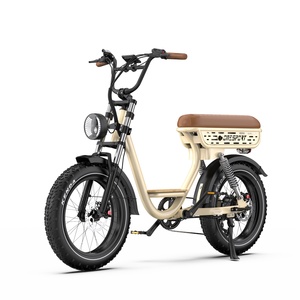
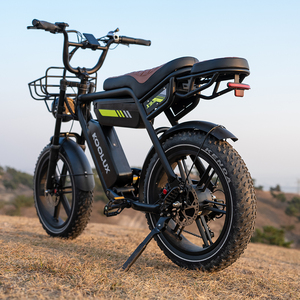
| Stealth Bomber All-Terrain MTB | 52V–72V / 2,000W–5,000W | 52V 25Ah High-Rate Lithium | 120 N.m / 50–70 km/h | Adrenaline trail riding, dual-purpose commuting |
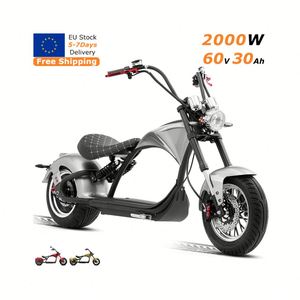
| EEC Citycoco / Fat Scooter | 60V / 2,000W–3,000W | 60V 30Ah Removable Pack | 95 N.m / 45–60 km/h | European urban transport (L1e/L3e road legal) |
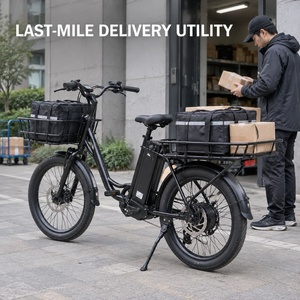
| Commercial Logistics & Cargo E-Bike | 36V–48V / 500W–1,000W | Dual 36V/48V Swappable Battery | 80 N.m / 25–40 km/h | Last-mile food delivery, express courier fleets |
| Utility Energy & BESS Integration | High Voltage 300V–800V Systems | LiFePO4 Air/Liquid Cooled Systems | Commercial Energy Storage | Factory solar storage, charging station buffer |
The true benchmark of a powerful electric bike lies in its powertrain integration. High wattage alone does not guarantee performance if thermal management or controller algorithms fail under heavy load. Advanced Chinese manufacturing centers around two key motor architectures:
A. Mid-Drive Brushless Motors with Primary Reduction Drives: Popularized by high-end electric motocross bikes (e.g., 79 Bike, Sur-Ron style builds), mid-drive units position the motor weight centrally within the chassis. By pairing a high-RPM brushless motor with a primary belt/gear reduction driving a secondary chain, the motor operates within its peak efficiency band (above 88% efficiency), reducing heat buildup during sustained steep hill climbs.
B. High-Torque Direct-Drive & Geared Rear Hub Motors: Utilized in fat-tire all-terrain e-bikes and urban cruisers. Advanced direct-drive motors utilize stator laminations as thin as 0.35mm to minimize eddy current losses, while internal planetary gears in hub systems provide massive low-end torque for heavy cargo transport.
The Role of Smart FOC Controllers: Square-wave controllers are obsolete in premium builds. Modern Chinese high-power e-bikes utilize Sine-Wave Vector FOC Controllers. By continuously tracking rotor magnetic position via Hall sensors or sensorless algorithms, FOC controllers deliver smooth torque response, reduce electromagnetic operational noise to near silence, and implement intelligent regenerative braking that returns up to 18% of kinetic energy back to the battery pack while diminishing brake pad wear.
Battery technology dictates both vehicle range and operational safety. In high-power procurement, buyers must choose between two dominant chemistries based on target environmental conditions:
Leading factories incorporate smart Battery Management Systems (BMS) with active balancing, temperature monitoring sensors embedded across cell banks, CAN-Bus/RS485 communication protocols for app connectivity, and over-current protection circuits to safeguard cell matrix health.
Key market dynamics shaping electric two-wheeler supply chains and competitive advantage.
The industry is migrating away from 48V setups toward 72V and 96V architectures. Higher system voltage reduces current draw (Amperage) for the equivalent wattage output, drastically lowering resistive heat in wiring harnesses and controllers while increasing overall system powertrain efficiency.
Commercial buyers and end-users demand keyless NFC ignition, remote anti-theft tracking, over-the-air (OTA) firmware updates, real-time BMS cell diagnostic monitoring, and geo-fencing speed restrictions managed entirely via iOS/Android smartphone apps.
For last-mile delivery fleets and ultra-long-distance touring bikes (like the Koolux X9PRO series), dual-battery parallel discharge systems eliminate range anxiety, offering over 150 km of real-world range on a single charge cycle.
Critical operational answers for brand managers, wholesalers, and fleet buyers looking to import from Chinese manufacturers.
For standard factory-spec models with existing overseas stock (EU/US warehouses), MOQ can be as low as 1 to 5 units for sample testing. For custom OEM branding (custom frame paint, logo application, customized carton packaging), standard factory MOQ typically ranges between 20 to 50 units (matching a 20ft container load). Full ODM projects requiring custom frame tooling usually require an initial commitment of 200+ units.
Reputable manufacturers provide full Dangerous Goods (DG) shipping documentation, including UN38.3 test reports, Material Safety Data Sheets (MSDS), and Sea/Air Freight Transport Identification Certificates. Batteries are packaged in UN-certified dangerous goods cartons with anti-ignition isolation materials to satisfy international maritime (IMDG Code) and air transport guidelines.
SKD (Semi-Knocked Down): The bike is 85% assembled in the carton (front wheel, handlebars, pedals, and battery detached). This minimizes assembly time upon arrival for retailers.
CKD (Completely Knocked Down): Components are shipped completely unstacked in bulk cartons. CKD drastically reduces shipping volume (allowing 2.5x more units per container) and often qualifies for lower import tariff rates in destination countries with local assembly plants.
Yes. Manufacturers offer dual-mode firmware tuning and physical speed-limit switches to cap output at 250W / 25 km/h (EU EPAC EN15194 standard) or 750W / 28 mph (US Class 1/2/3 e-bike rules). For full-power operation (L3e / motorcycle classification in Europe), factories can supply vehicles with EEC homologation certificates, mirrors, turn signals, horn, VIN plate, and COC (Certificate of Conformity) documents required for street registration.
Standard B2B factory warranties include 12 to 24 months for core structural frames, motors, and battery packs, and 12 months for controllers and chargers. Manufacturers typically include a 1%–2% free wearable spare parts package (brake pads, inner tubes, throttle assemblies, spokes) with full container shipments, alongside technical repair manuals and diagnostic software support.
Tier-1 facilities utilize Grade-A brand new cells (A-grade EVE, CATL, LG, or Samsung cells) with strict internal resistance matching. Automated cell sorting machines group cells within 0.5mΩ resistance tolerances. Automated spot-welding with pure nickel strips, integrated silicone thermal pads, flame-retardant cell holders, and multi-protection smart BMS boards prevent overcharging, short-circuits, and cell degradation.
Access our complete 2026 product line catalog including 5kW–12kW Off-Road E-Dirt Bikes, EEC Certified Scooter Lineups, Cargo Delivery Fleets, and Battery Energy Systems.