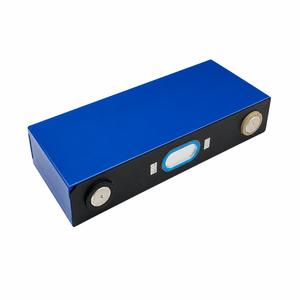
As a premier China commercial electric bike supplier and global exporter, our fleet-tested two-wheelers are engineered for high-duty urban delivery, rugged off-road operations, and long-range commuter logistics. Explore our flagship models available for bulk export.
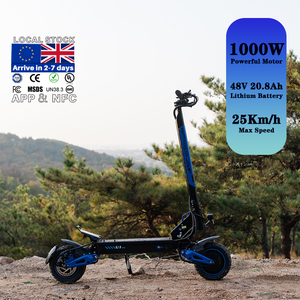
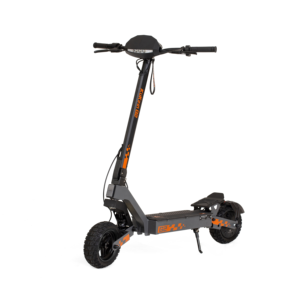
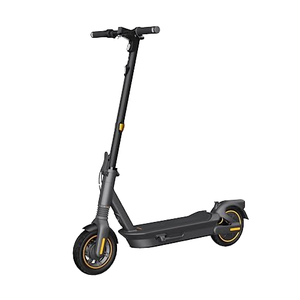
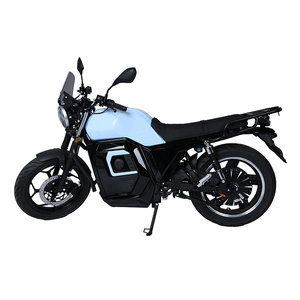
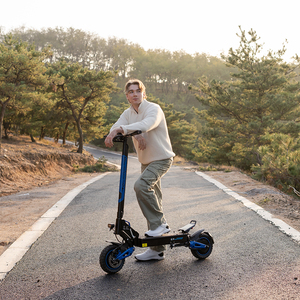
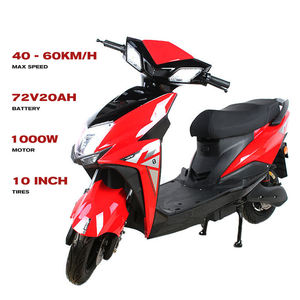
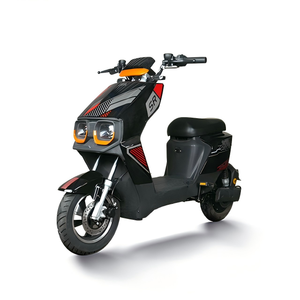
The international commercial electric two-wheeler market is transitioning through a structural transformation. Global logistics networks, last-mile courier services, and urban mobility platforms are aggressively retiring internal combustion engine (ICE) fleets in favor of enterprise-grade commercial electric bikes and scooters. As the premier China top commercial E bike supplier & exporter, our engineering philosophy addresses the core pain points of B2B procurement officers, fleet operators, and regional distributors: total cost of ownership (TCO) minimization, thermal battery stability, frame fatigue endurance, and seamless supply chain integration.
For commercial fleet operators across Europe, North America, Southeast Asia, and the Middle East, the transition to commercial E-bikes is governed by stringent unit economics. Traditional gas-powered commuter bikes incur substantial operational expenditure through petrol volatility, frequent clutch replacement, oil cycle maintenance, and mechanical wear. Conversely, commercial electric motorcycles and heavy-duty utility E-bikes built upon 60V and 72V architecture yield up to an 82% reduction in per-kilometer energy expenditures.
Our enterprise e-mobility platforms incorporate regenerative braking controllers and high-efficiency permanent magnet synchronous motors (PMSM) or brushless DC hub motors (800W to 2000W). This powertrain design achieves up to 92% electromechanical efficiency, drastically cutting power draw during stop-and-go delivery runs while mitigating mechanical brake pad wear.
Battery pack failure represents the single highest risk factor in commercial two-wheeler deployment. Conventional Ternary Lithium (NMC) batteries suffer from severe cycle degradation under high thermal loads—a major failure mode in high-temperature export regions such as South Asia and the Middle East. To provide unprecedented reliability, our factory leads the industry in integrating automotive-grade Grade A Prismatic LiFePO4 (LFP) cells into commercial E-bike chassis.
| Performance Parameter | Standard NMC Lithium Packs | Industrial Grade LiFePO4 (LFP) Packs | B2B Operational Impact |
|---|---|---|---|
| Cycle Life (to 80% Capacity) | 500 – 800 Cycles | 2,500 – 4,000+ Cycles | Extends battery asset life from 2 years to 6-8 years in daily fleet use. |
| Thermal Runaway Threshold | ~210°C | ~270°C to 500°C | Eliminates combustion risks during extreme ambient heat (45°C+ climates). |
| Daily Discharge Stability | Voltage drops rapidly under 30% SOC | Flat discharge curve down to 10% SOC | Ensures consistent top-speed and torque output across full shifts. |
| Maintenance Cost per 10k km | High (Frequent replacement) | Ultra-Low (Balanced BMS) | Dramatically improves ROI for delivery operators and rental networks. |
Commercial applications demand purpose-built structural integrity. Our manufacturing facility in China utilizes high-precision automated robotic welding for 6061 T6 heat-treated aluminum alloy frames and heavy-gauge carbon steel chassis. Designed to withstand payload capacities up to 200kg, every frame undergoes 500,000-cycle dynamic stress testing on automated road simulation rigs.
Furthermore, our OEM/ODM modular engineering allows enterprise buyers to tailor voltage configurations (48V, 60V, 72V), controller current limits, NFC keyless ignition systems, IoT telemetry modules (GPS tracking, remote diagnostic CAN-bus, cellular geofencing), and customized cargo rack geometry.
Procurement leaders evaluating long-term supply chain partnerships must align with future technological shifts. As a pioneer in electric two-wheeler exporting, we identify three critical trends dictating the future of commercial electric bike manufacturing:
Commercial fleets are demanding integrated CAN-bus communication protocols connected to cloud-based management dashboards. Real-time battery State of Health (SOH) monitoring, predictive maintenance alerts, and remote OTA firmware updates are becoming mandatory baseline requirements for tier-1 logistics operators.
The industry is migrating from legacy 48V architectures toward 60V and 72V high-efficiency systems. Paired with high-amperage smart chargers (10A to 20A fast chargers) and active thermal management, down-time during shift changes is reduced from 6 hours to under 90 minutes.
Global import barriers are tightening around safety standards. Compliance with EN15194:2017, UL 2849 (electrical system safety), UL 2271 (battery safety), ISO 4210, and UN 38.3 transport certification is crucial for seamless customs clearance across European, American, and Australian markets.
Our enterprise infrastructure seamlessly bridges manufacturing precision with global trade execution. Unlike trading intermediaries, our integrated factory direct pipeline provides transparent quality control, predictable production scheduling, and comprehensive after-sales technical support.
From raw tubing laser-cutting, robotic frame welding, automated powder-coating lines to final dyno testing, our factory maintains rigorous quality control at every stage of assembly.
To support distributor inventory turn-around, we maintain strategically placed overseas stock hubs across the EU, UK, and Australia, enabling rapid door-to-door delivery and zero-MOQ sample dispatch.
Our engineering team supplies comprehensive service manuals, exploded-view spare parts catalogs, technician video guidance, and guaranteed long-term replacement component supply chains.
Partner directly with a certified industry leader. Whether you require custom OEM fleet development, local warehouse wholesale stock, or specialized LFP battery solutions, our export team is ready to deliver tailored quotations.