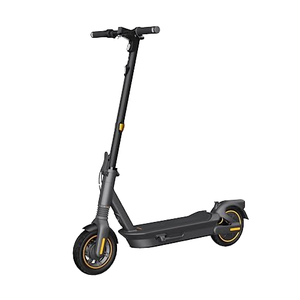
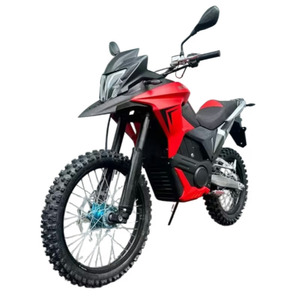
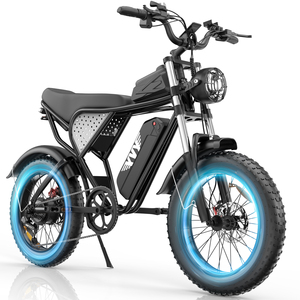
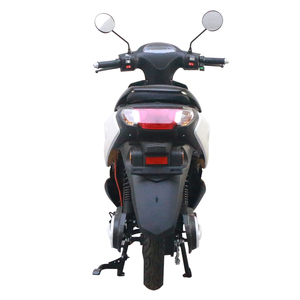
Explore our flagship export platforms engineered for international compliance, structural endurance, and custom LFP integration. Each unit represents a fully customizable OEM platform tailored for regional distributors, commercial fleets, and municipal transit projects.
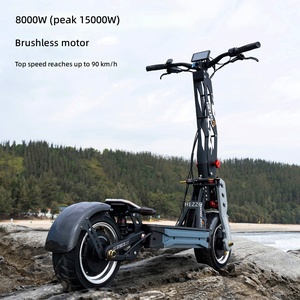
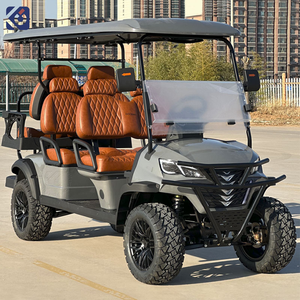
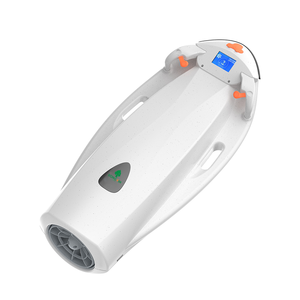
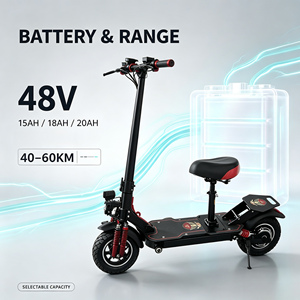
As the global electric micro-mobility sector transitions from legacy lead-acid and volatile ternary lithium chemistry (NCM/NCA) to high-durability Lithium Iron Phosphate (LiFePO4/LFP), B2B importers, brand owners, and fleet operators require deep technical insight into battery chemistry performance, BMS firmware optimization, structural chassis integration, and total cost of ownership (TCO) parameters.
Standard ternary lithium (NCM) cells experience thermal runaway at temperatures as low as 210°C, presenting significant risks during high-ambient-temperature operation, rapid charging, or physical impact. In contrast, Lithium Iron Phosphate (LiFePO4) exhibits strong chemical and thermal stability, with decomposition occurring only above 500°C.
Our proprietary OEM LFP pack designs integrate cell-level thermal barriers, structural aluminum casings, and phase-change material (PCM) heat sinks. This ensures stable operation under ambient tropical heat exceeding 45°C—a critical operational requirement for fleets operating across South Asia, the Middle East, Africa, and Latin America.
While NCM batteries generally degrade to 80% State of Health (SoH) within 800 to 1,200 full charge-discharge cycles, commercial-grade LFP cells manufactured under our OEM standards deliver over 3,000 to 4,000 cycles at 80% Depth of Discharge (DoD).
| Performance Metric | Lithium Iron Phosphate (LFP / LiFePO4) | Ternary Lithium (NCM / NCA) | Legacy Lead-Acid / AGM |
|---|---|---|---|
| Thermal Runaway Threshold | 500°C (High Thermal Stability) | 210°C (High Risk) | 150°C (Off-gassing) |
| Cycle Life (80% DoD) | 3,000 – 4,500 Cycles | 800 – 1,200 Cycles | 350 – 500 Cycles |
| Nominal Cell Voltage | 3.2 V | 3.6 V – 3.7 V | 2.0 V |
| Levelized Cost per km (TCO) | Lowest (Long Term Fleet Savings) | Moderate | High (Frequent Replacements) |
| Environmental & Cobalt Impact | 100% Cobalt-Free / Non-Toxic | Contains Cobalt & Nickel | Heavy Lead Contamination |
An OEM electric bike is only as reliable as its power management electronics. Our custom LFP battery architectures incorporate advanced Smart BMS units featuring CAN-Bus, RS485, or Bluetooth communication protocols. The BMS continuously monitors individual cell voltages, state of charge (SoC), passive/active balancing currents, and multi-point temperatures.
For commercial fleet operators (last-mile delivery, vehicle sharing networks), our controllers integrate cloud-connected IoT telematics, facilitating real-time remote diagnostics, geo-fencing, anti-theft battery lockouts, and predictive maintenance algorithms that extend pack longevity by up to 25%.
Combining deep regional operational experience with automotive-grade manufacturing rigor, our engineering ecosystem operates at the forefront of clean transportation in developing and emerging markets.
Operating from our state-of-the-art production facility located on Sue Asil Road, Lahore, backed by executive operations at Askari Corporate Tower, Gulberg III, our organization established Pakistan’s first fully integrated electric two-wheeler manufacturing ecosystem. Under the strategic vision of founder Dr. Mohammad Amjad alongside executive leadership—Shahzaib Amjad (Managing Director), Zohaib Amjad, and Jahanzaib Amjad—we have transformed urban commuting from fossil-fuel dependence to high-efficiency electric mobility.
Unlike trading companies or assembly brokers, our factory controls the full industrial value chain: high-precision automated frame welding, robotic electrostatic powder coating, multi-stage dyno testing, automated LFP cell sorting, and custom BMS programming. Our platforms (including the high-performance JE-125L, rugged JE 70G Wolf, JE 70L Fury, and heavy-duty Mecha series) prove that localized engineering can deliver rugged endurance under demanding road conditions.
Complete flexibility over frame geometry, motor wattage (500W to 8000W), battery compartment dimensions, colorways, graphic liveries, branding, and dashboard UI interfaces.
Optimized Completely Knocked Down (CKD) and Semi Knocked Down (SKD) packaging designed to reduce international shipping volumes, lower import tariffs, and enable localized assembly.
Every production batch undergoes 100% vibration testing, waterproof chamber testing (IP67 battery rating), high-current load testing, and chassis fatigue stress testing before export dispatch.
Navigating the global energy transition requires understanding key structural market developments. Importers, brand partners, and government procurement officers should evaluate these macroeconomic and technological shifts.
Regulatory pressure surrounding cobalt supply chains and safety concerns with legacy NCM cells are driving a global mandate toward LFP. Major global automotive manufacturers and fleet operators are standardizing on LFP for non-car micro-mobility assets due to its cycle life and safety profile.
Last-mile logistics providers are moving away from fixed-wire charging infrastructure toward standardized, quick-swap LFP battery modules. Future-proof OEM platforms incorporate modular quick-release mechanisms compatible with universal swap cabinet protocols.
Emerging markets demand dual-purpose electric vehicles—capable of handling daily passenger transit alongside heavy cargo delivery. Frame engineering is shifting from light urban tubing to reinforced steel-alloy space frames rated for 150 kg to 250 kg payloads.
Detailed technical and commercial answers tailored for international procurement officers, fleet operators, and OEM brand buyers.