Explore our high-performance fleet platforms engineered for commercial deployment, urban commuting, and extreme payload endurance.
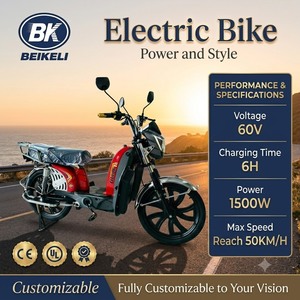
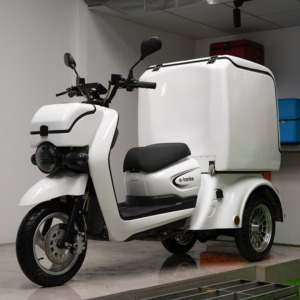

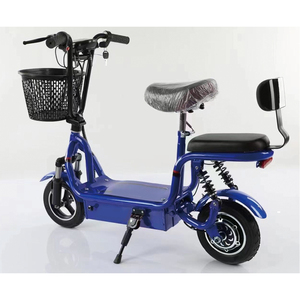

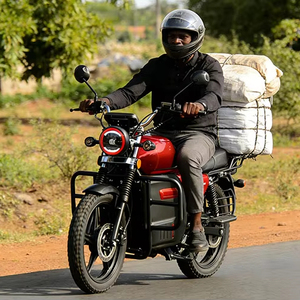
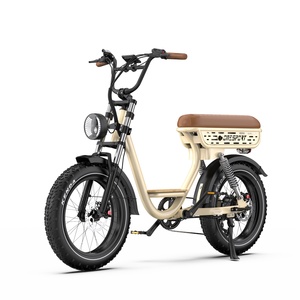
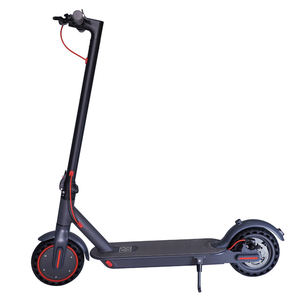
As a leading Chinese manufacturer and global exporter of urban electric scooters and light electric vehicles (LEVs), our manufacturing philosophy is grounded in total engineering sovereignty. Unlike trading intermediaries that assemble unverified white-label components, our manufacturing facilities integrate precision robotic welding, automated SMT PCB assembly for Battery Management Systems (BMS), and rigorous dynamometer stress testing.
Our OEM/ODM infrastructure is purpose-built to address the intense operational demands of international B2B importers, government procurement bodies, and last-mile delivery fleets. By engineering our vehicles from the frame geometry up, we guarantee structural integrity, long-term electrical reliability, and localized regulatory compliance across European, North American, and Asian markets.
We pioneer Lithium Iron Phosphate (LiFePO4) battery architecture in micro-mobility platforms. LFP offers over 3,000 charge cycles and superior thermal safety in extreme summer climates exceeding 45°C without risk of thermal runaway.
From EEC Euro-5 certificates to DOT and UL2272 compliance, we provide full technical documentation, custom chassis branding, localized lighting configurations, and software firmware matching.
Integrated CAN-bus communication modules allow commercial operators to track vehicle health, monitor battery state of charge (SoC) in real-time, execute remote OTA diagnostics, and enforce geo-fencing speed restrictions.
The global urban electric scooter industry is undergoing a structural transition driven by stringent urban low-emission zones (LEZs), rising fuel costs, and the rapid expansion of last-mile e-commerce logistics. Simple recreational kick-scooters are rapidly giving way to commercial-grade, heavy-duty electric scooters and high-voltage pedelecs optimized for continuous daily operation.
Historically, urban electric two-wheelers relied heavily on Nickel Manganese Cobalt (NMC) battery packs due to their initial energy density. However, for B2B fleet operators and high-utilization commuters, life-cycle economics and thermal safety have shifted preference decisively toward Lithium Iron Phosphate (LiFePO4). LFP chemistry delivers up to 4x longer operational lifespans (over 3,000 full cycles to 80% capacity retention) and inherently eliminates the risk of thermal runaway fires during rapid charging or exposure to extreme ambient heat. Research and development teams are currently testing semi-solid state cells to increase volumetric energy density while preserving non-flammable safety properties.
Urban topographies demand superior gradeability and sustained speed without motor overheating. Modern urban e-scooters are shifting from legacy 48V architectures to 60V and 72V platforms paired with Field-Oriented Control (FOC) vector controllers. FOC controllers deliver smooth torque response, lower energy conversion losses, and up to 92% efficiency ratings across wide RPM bands. Dual-motor setups with automatic power distribution are becoming standard for utility electric motorcycles and off-road freight vehicles capable of climbing 30-degree inclines with heavy cargo loads.
Structural failure under fatigue stress represents the single largest cost risk for commercial fleet operators. Advanced manufacturing utilizes aviation-grade 6061-T6 aluminum alloys and high-tensile carbon steel hydroformed tubing. Robotically welded frames undergo ultrasonic flaw detection and 500,000-cycle vibration stress tests to ensure structural survival over harsh urban cobblestones and unpaved roads.
Global distributors and fleet operators are revamping their procurement strategies to insulate themselves against supply chain bottlenecks, evolving trade tariffs, and localized service demands. Key procurement trends shaping the 2025–2030 horizon include:
To bypass high import duties on fully built units (CBU), major importers are requesting Semi-Knocked-Down (SKD) and Completely-Knocked-Down (CKD) vehicle packages. Our manufacturing plants provide customized CKD kit packaging, color-coded wiring harnesses, jig tooling, and technical assembly training videos enabling overseas partners to establish cost-efficient local assembly lines while capturing tax incentives.
Downtime equals lost revenue for gig-economy delivery drivers. Procurement is rapidly converging on standardized, hot-swappable battery compartment dimensions. By establishing uniform voltage pinouts and smart battery locking mechanisms, commercial fleets can swap depleted batteries at automated kiosks within 30 seconds, maintaining 24/7 continuous operation.
Professional procurement teams no longer evaluate suppliers solely on FOB unit price. Procurement criteria have shifted to total lifetime cost per kilometer. Suppliers that offer high-grade components—such as IP67 waterproof connectors, puncture-resistant tubeless fat tires, disc brake pads with extended wear cycles, and modular plug-and-play wiring—drastically reduce field warranty claims and elevate fleet profitability.
Whether you are launching an urban delivery fleet, expanding a regional EV distribution network, or developing a proprietary micro-mobility brand, our engineering team delivers industrial-grade reliability at competitive factory pricing.
Contact Us