
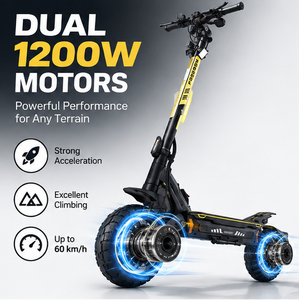
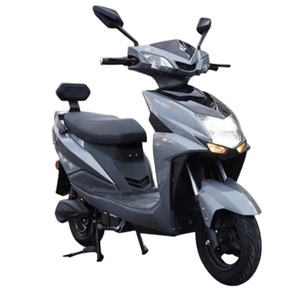
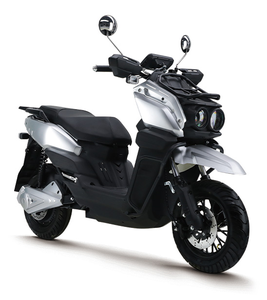
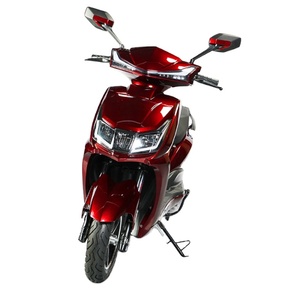
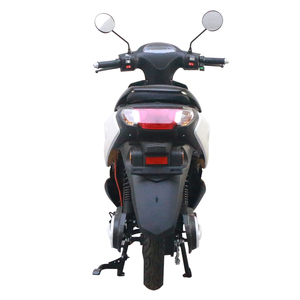
High Performance Electric Scooter Dual 1200W Motors & 48V 23Ah Battery
Dual Motor:2400W Peak
Battery:48V 23Ah Lithium
Max Speed:55 KM/H
Max Range:65-75 KM
Engineered for urban commuting, heavy commercial duty, and high-speed long-range performance. Sourced directly from certified OEM manufacturing facilities.
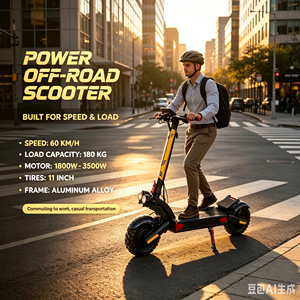
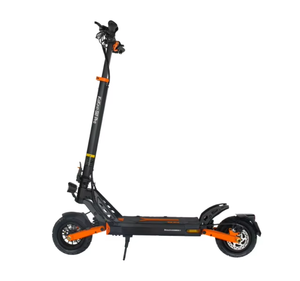
A comprehensive technical evaluation guide for B2B importers, brand owners, fleet managers, and regional distributors evaluating electric two-wheeler manufacturers.
In high-performance electric two-wheelers, battery chemistry selection directly determines operational longevity, safety profile, and total cost of ownership (TCO). Standard Lithium Nickel Manganese Cobalt Oxide (NCM) cells offer high energy density but present thermal runway vulnerabilities when subjected to ambient temperatures exceeding 40°C or prolonged continuous dual-motor discharge.
Leading original equipment manufacturers (OEMs) have shifted toward Lithium Iron Phosphate (LiFePO4 / LFP) cell integration for heavy-duty and commuter scooter platforms. LFP chemistry exhibits high thermal stability (decomposition temperature ~500°C compared to ~210°C for NCM), enabling over 2,500 to 3,500 charge-discharge cycles while retaining 80% capacity. For global importers targeting Middle Eastern, South Asian, Latin American, and African markets, LFP battery configurations engineered with smart Battery Management Systems (BMS) featuring CAN-bus communication provide live thermal tracking, over-current cutoff, and automated cell balancing.
Dual 1200W or 2000W BLDC hub motors utilize Vector Field-Oriented Control (FOC) controllers to distribute torque dynamically between front and rear axles. This prevents wheel spin on steep gradients (>30%), reduces heat accumulation per motor by up to 34%, and extends peak efficiency range across urbanstop-and-go routes.
| Technical Parameter | Standard Entry Scooter | Commercial Commuter (JE Series) | Ultra High-Performance Dual Drive |
|---|---|---|---|
| Motor Architecture | 350W - 500W Single Hub | 1000W - 1500W Brushless Hub | Dual 1200W / Dual 2000W Motors |
| Battery System | 48V 12Ah Lead-Acid / NCM | 60V 30Ah / 50Ah LFP Pack | 72V 38Ah / 50Ah Heavy-Duty LFP |
| Peak Controller Current | 15A - 20A Square Wave | 35A - 45A FOC Sine Wave | 60A - 80A Smart Dual FOC |
| Chassis Structure | Stamped Steel Tubing | Reinforced Tubular Steel / Alloy | Aviation-Grade 6061-T6 Aluminum |
| Braking Protocol | Mechanical Cable Drum | Front Disc / Rear Drum + E-ABS | Dual Hydraulic Twin-Piston Disc |
| Target IP Rating | IP54 Overall | IP65 Motor / IP67 Battery Pack | IP67 Full Powertrain Enclosure |
High performance demands superior mechanical resilience. Under harsh road conditions, standard scooter frames suffer from metal fatigue at the steering neck and swingarm pivot points. Premier exporters execute Finite Element Analysis (FEA) simulations to optimize frame topology, replacing welded iron joints with forged aluminum alloy or robotic MIG-welded high-tensile steel frames capable of bearing payload weights exceeding 180 kg.
Suspension setups have evolved from simple coil springs to dual-stage hydraulic inverted front forks combined with nitrogen-charged rear shock absorbers. This dampening architecture minimizes unsprung mass feedback, stabilizes high-speed cornering at 60–80 km/h, and protects sensitive internal electronics (such as controllers, display units, and BMS circuits) from high-frequency vibration damage.
Combining vertical manufacturing integration, rigorous quality assurance, and complete global compliance to deliver unmatched commercial value.
Equipped with automated assembly lines, robotic frame welding, and specialized battery pack encapsulation facilities. Operating directly from primary industrial bases eliminates middleman markups and guarantees stringent lot-to-lot consistency.
Pioneering the integration of LFP cells into high-performance scooters. Designed specifically for high ambient temperatures, delivering superior thermal safety, zero maintenance risk, and extended lifecycle durability.
All export scooter lines fulfill international regulatory benchmarks including ISO9001, CE, EEC/COC certification, UN38.3 battery transport safety standards, and DOT compliance for seamless customs clearance worldwide.
Optimized logistics solutions allowing clients to import via Completely Knocked Down (CKD) or Semi-Knocked Down (SKD) kits to significantly lower import tariffs, save container space, and foster local assembly workforce development.
Comprehensive private-label support including hydro-transfer colorways, custom mold creation, tailored controller speed modes, branded digital display clusters, and bespoke software telemetry solutions.
Protecting distributor business operations with structured spare parts reserves (5% quick-wear parts provision), technician training programs, warranty claims processing, and dedicated technical service documentation.
The electric scooter export ecosystem is undergoing a dramatic shift driven by consumer demand for higher speeds, longer ranges, and automotive-grade reliability. Importers and procurement directors must align their multi-year sourcing strategy with four pivotal technological vectors:
Traditional 48V systems are rapidly reaching their physical thermal limits for high-speed applications. Transitioning to 60V, 72V, and 96V power platforms reduces phase current draw for the equivalent power output ($P = V \times I$), effectively cutting $I^2R$ resistive thermal losses in wiring harnesses and controllers by over 40%. This enables sustained top speeds above 70 km/h without thermal throttling.
Commercial electric scooters are no longer standalone mechanical vehicles; they are connected IoT endpoints. Future-ready manufacturers integrate 4G LTE / GPS telematics boxes directly onto the main CAN-bus system. B2B fleet operators can monitor remote diagnostics, battery State of Charge (SoC), State of Health (SoH), geofencing parameters, and over-the-air (OTA) firmware updates in real-time.
For last-mile delivery enterprises (e.g., food delivery, courier services), charging downtime represents lost revenue. The market is aggressively moving toward dual removable battery bays equipped with hot-swapping functionality or standardized battery-swapping station compatibility.
Global buyers—especially in European and North American jurisdictions—are increasingly bound by corporate sustainability directives. Manufacturers utilizing clean energy solar power during factory assembly, non-toxic powder coating processes, and fully recyclable aluminum chassis structures will command a decisive competitive advantage in global tenders.
Direct technical and operational answers to common queries raised by international buyers, wholesalers, and OEM clients.