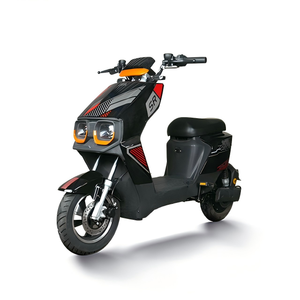
Precision-manufactured electric motorcycle assemblies, lithium energy storage modules, and high-performance drivetrain components compliance-tested for US highways and off-road applications.
The global shift toward light electric vehicle (LEV) architecture has redefined the global automotive supply chain. For United States original equipment manufacturers (OEMs), brand owners, and fleet operations, sourcing electric motorcycle components directly from tier-1 Chinese factories presents an unparalleled strategic advantage in cost-efficiency, technical scalability, and technological maturity. However, navigating the US import landscape requires a nuanced understanding of Federal Motor Vehicle Safety Standards (FMVSS), DOT/EPA regulatory compliance, structural metallurgy, and complex battery chemistry requirements.
As a leading Chinese EV components manufacturer, our production lines are specifically tuned to bridge China's massive supply chain scale with strict North American quality criteria. From high-discharge Lithium Iron Phosphate (LiFePO4 / LFP) battery cell architecture to vector-controlled Field Oriented Control (FOC) sine-wave controllers and high-tensile 6061-T6 aluminum alloy frames, our components are engineered to endure the extreme operational demands of American urban, suburban, and off-road riding environments.
Information Gain Insight for Procurement Directors: Modern US e-mobility sourcing has shifted from buying fully built turn-key units to importing Complete Knock-Down (CKD) kits and high-grade modular components. This strategy reduces section 301 tariffs, minimizes logistics costs via optimized volumetric density in 40ft HQ containers, and allows localized assembly that aligns with US state-level EV incentives.
The North American electric motorcycle and high-power e-bike market is vastly different from European or Asian markets. American consumers demand higher top speeds, rapid acceleration, extended range across wide urban sprawls, and thermal endurance during high-ambient-temperature operations in Sunbelt states like California, Texas, Arizona, and Florida. Below are four primary application scenarios where our custom-manufactured EV components dominate:
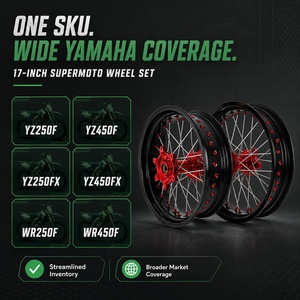
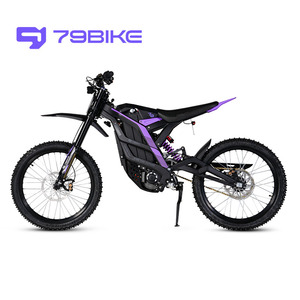
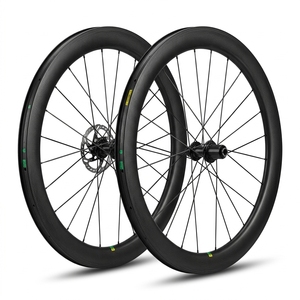
Off-road recreational riding across American trail systems demands extreme mechanical resilience and peak power output. Our 5000W to 12,000W mid-drive brushless DC (BLDC) motors paired with CNC-machined 6061-T6 anodized supermoto wheel kits are specifically built to absorb violent impact loads. Utilizing advanced heat dissipation fins and IP67 waterproof sealing, these powertrains prevent thermal throttling even under continuous wide-open throttle (WOT) operation across steep incline climbs and desert terrain.
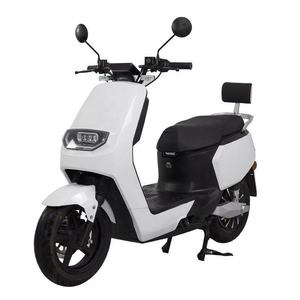
In metropolitan hubs such as New York City, Chicago, San Francisco, and Los Angeles, last-mile delivery services depend on heavy-duty electric motorcycles and commercial cargo scooters operating up to 16 hours a day. Fleet managers require low-maintenance brushless hub motors (1000W to 2000W) combined with heavy-duty dual-disc hydraulic braking systems. Integrated with high-cycle Grade-A LiFePO4 battery packs capable of 3,500+ charge cycles, our fleet components deliver minimal total cost of ownership (TCO) and eliminate downtime caused by mechanical wear.
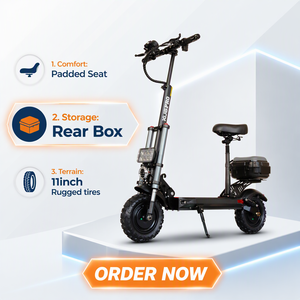
University campuses and suburban communities across the US Sunbelt are rapidly adopting lightweight dual-motor electric scooters and low-speed electric vehicles (LSEVs). Designed with CAN-BUS smart telematics, these platforms allow operators to track GPS location, monitor state of charge (SoC) remotely, and implement geofencing speed limits to conform with local municipal safety codes.
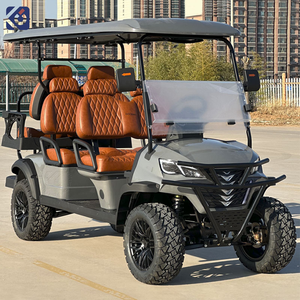
Low-speed 72V commercial sightseeing vehicles and 6-seater utility carts require high-torque 72V brushless powertrains capable of smooth acceleration while carrying heavy payload capacities up to 1,500 lbs. Our high-efficiency copper-wound motors combined with reinforced carbon-steel chassis components ensure long operational lifespans for golf courses, gated communities, and luxury resort facilities across North America.
To maintain market dominance in the US e-mobility sector, manufacturers must adapt to rapid technological shifts. Our R&D facility continuously integrates advanced engineering innovations into our OEM/ODM component catalogs:
US consumers favor higher operating voltages to reduce system current draw, minimize I²R copper heating losses, and achieve sustained top speeds exceeding 60–75 mph on American suburban roads without overheating the motor windings.
Our BMS modules utilize active balancing protocols and single-cell voltage monitoring, communicating seamlessly via CAN 2.0B or RS485 protocols with onboard digital dashboards, IoT tracking devices, and fast chargers.
Replacing traditional heavy steel frames with high-modulus carbon fiber components and hollow-forged aluminum alloy swingarms reduces total vehicle curb weight by up to 35%, significantly improving vehicle handling and range efficiency.
Selecting the optimal motor and battery specification depends heavily on the intended US vehicle classification. The table below outlines the core specifications engineered in our Chinese factory for North American export:
| Component Specification | Light Urban Commuter | Commercial Delivery Fleet | High-Power Dual-Sport / Dirt |
|---|---|---|---|
| Nominal Voltage Platform | 48V - 60V DC | 60V - 72V DC | 72V - 96V DC High-Voltage |
| Motor Architecture | BLDC Gearless Hub Motor | Heavy-Duty Direct Drive Hub | Internal Permanent Magnet (IPM) Mid-Drive |
| Peak Power Output | 1,000W - 2,000W | 2,000W - 4,000W | 5,000W - 15,000W+ |
| Battery Chemistry | Lithium NMC 18650 / 21700 | Prismatic LFP (LiFePO4) Grade-A | High-Discharge Rate NMC / LFP Cells |
| Controller Technology | Sine-Wave FOC 12-Mosfet | Programmable CAN-BUS 24-Mosfet | Vector FOC High-Phase Current Controller |
| Braking Hardware | Single Disc / Mechanical Drum | CBS Hydraulic Dual Disc | 4-Piston Radial Caliper Hydraulic Disc |
| US Regulatory Code | CPSC / Local e-Bike Laws | DOT FMVSS No. 123 Compliant | EPA Off-Road / DOT Highway Registered |
Importing electric motorcycle parts into the US market involves stringent oversight by multiple federal agencies, including the Department of Transportation (DOT), the National Highway Traffic Safety Administration (NHTSA), the Environmental Protection Agency (EPA), and US Customs and Border Protection (CBP). As an experienced OEM manufacturing partner, we adhere strictly to the following regulatory protocols to guarantee smooth customs clearance and legal marketability:
Importing Complete Knock-Down (CKD) kits allows US buyers to reduce freight costs significantly by packing 3x more units per shipping container compared to fully assembled vehicles (CBU). Furthermore, CKD kits often incur lower tariff rates and enable US-based final assembly, allowing brands to market products with 'Assembled in USA' compliance while fulfilling local procurement requirements.
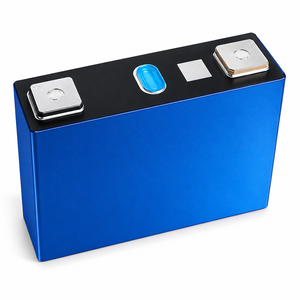
Prismatic Lithium Iron Phosphate (LiFePO4) chemistry offers superior thermal stability and long life. While NMC cells yield higher energy density, LiFePO4 delivers 3,500 to 5,000 charge cycles (compared to 800-1,000 for NMC) and tolerates higher temperatures without risk of thermal runaway, making it the preferred choice for commercial delivery fleets and high-temperature US climates.
Our FOC vector controllers support open CAN-BUS 2.0B communication protocols. We provide fully documented SDKs and API integration tools allowing US fleet software developers to read real-time operational data including motor RPM, battery State of Health (SoH), MOSFET temperatures, and error diagnostics directly through IoT telematics hardware.
For standardized catalog parts (e.g., rims, standard BLDC hub motors), MOQs start at 50 to 100 units with production lead times of 15–20 days. For full custom OEM projects requiring proprietary tooling, aluminum casting, or custom chassis geometry, sample development takes 30–45 days, followed by mass production cycles of 30 days upon sample approval.
Every production batch undergoes 100% End-of-Line (EOL) testing. Motors are subjected to dynamometer torque/speed profiling and IP67 water-immersion testing. Battery packs undergo automated cell sorting, laser-welding pull testing, and 72-hour burn-in charge/discharge balancing cycles. Final pre-shipment inspections adhere to ISO 2859-1 AQL Level II standards.
Partnering with our factory gives US brands direct access to advanced industrial manufacturing capabilities built on over 15 years of continuous EV engineering innovation:
Accelerate your US e-mobility product roadmap with industrial OEM/ODM solutions, compliant component architectures, and competitive factory-direct pricing.
Get a Quote