Industrial OEM/ODM E-Mobility Manufacturing, Class 1 & Class 2 Moped Street-Legal Customization, and High-Performance LFP Battery Solutions for Kansai Logistics & Commuter Fleets.
As Osaka Prefecture prepares for major commercial expansions and green infrastructure milestones, commercial delivery operators, municipal fleets, and localized two-wheeler distributors require tailored electric motorbike platforms engineered specifically for Japanese road regulations and micro-climate demands.
The Osaka metropolitan area—spanning dense commercial urban centers like Namba and Umeda, historical industrial zones in Sakai, and elevated residential suburbs near Ikoma and Minoo—presents a unique operational landscape for electric two-wheelers. Unlike flat grid cities, Osaka demands custom electric motorbikes capable of handling intense stop-and-go delivery cycles in narrow alleyways, high payload transport across river bridges, and reliable hill-climbing torque for suburban commutes.
Furthermore, exporting custom electric motorbikes and scooters into Japan requires rigorous compliance with the Japanese Road Traffic Act (道路交通法) and Road Transport Vehicle Act. Two-wheelers must be precision-configured to qualify under specific Japanese vehicle classifications: Class 1 Moped (原付一種 - under 0.6kW / 50cc equivalent) or Class 2 Moped (原付二種 - 0.6kW to 1.0kW / 125cc equivalent), as well as light motorcycle categories for mid-to-high drive powertrains. Essential OEM customizations include factory-integrated turn signals, JIS-compliant LED headlamps, dual rearview mirror mounts, rear license plate brackets with illumination, and horn assemblies tested to Japanese acoustic thresholds.
Beyond vehicle assembly, electrical safety is paramount. All imported lithium-ion battery packs must strictly comply with Japan's Electrical Appliance and Material Safety Law (PSE Mark / 電気用品安全法) and UN38.3 transport safety protocols to pass Osaka Customs seamlessly and guarantee long-term operational peace of mind.
Explore our core product lineup available for B2B bulk export, fleet integration, and custom OEM manufacturing tailored for the Japanese market.
Custom electric two-wheelers designed to solve micro-mobility and commercial transport challenges across Osaka's diverse urban geography and business districts.
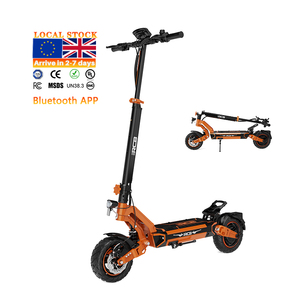
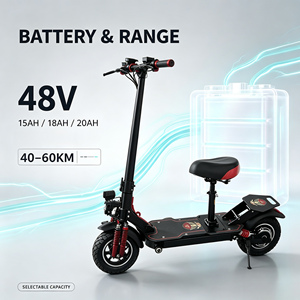
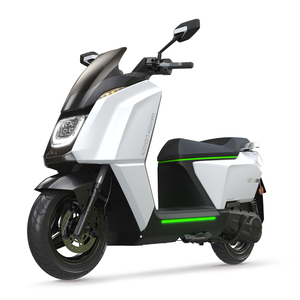
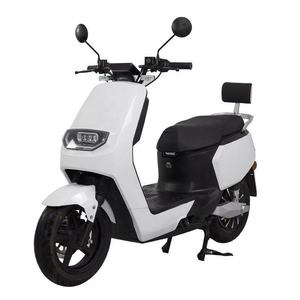
Osaka’s primary commercial centers feature extremely high pedestrian traffic, congested access lanes, and zero-emission delivery zones. Food delivery services and logistics companies operating around Osaka Station and Dotombori require lightweight, step-through electric scooters equipped with 48V/60V quick-swappable batteries. Compact platforms like the RCB D7 and Storm Series enable couriers to navigate narrow shopping arcades (shotaingai) efficiently while adhering to localized noise and emissions bans.
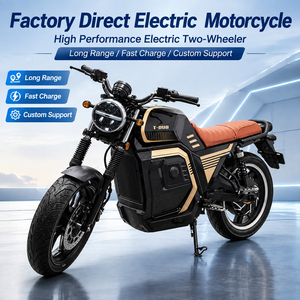
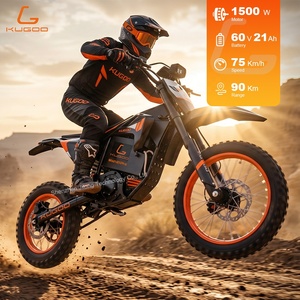
Riders commuting from Osaka's northern residential areas or eastern border towns face steep gradient changes. Standard low-wattage e-bikes frequently overheat or suffer rapid battery drain on these inclines. Our 3000W to 7500W mid-drive and hub-motor motorcycles (SG-C300 & Mid-Drive Series) feature advanced vector controllers (FOC) providing sustained peak climbing torque without thermal degradation, maintaining steady 60km/h+ road speeds under load.
Within Osaka’s industrial coastline in Sakai and Nanko Port, facility maintenance crews and heavy-goods handlers require robust utility two-wheelers. Models engineered with reinforced steel chassis and high payload capacity (up to 400kg payload rating) allow factory personnel to transport heavy tools and equipment across sprawling port complexes cleanly, cost-effectively, and with zero localized exhaust emissions.
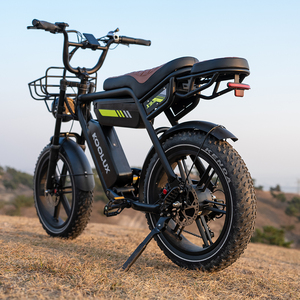
With Osaka hosting Expo 2025 on Yumeshima Island, international tourism and eco-mobility initiatives are surging. Rental operators around Osaka Castle, Bay Area resorts, and Expo corridors benefit from our customizable street-legal e-scooters and fat-tyre electric bikes (such as the Koolux X9PRO) equipped with smart NFC unlock, GPS fleet tracking, and geofencing limits to provide seamless tourist transport.
Stay ahead of Japanese market developments with our deep overview of legislative updates, battery chemistry shifts, and commercial fleet decarbonization targets.
| Trend Catalyst | Japanese Market Direction | OEM Engineering Adaptation | Osaka Operational Advantage |
|---|---|---|---|
| Revised Road Traffic Act (Specified Small Mopeds) | Legalization of light e-scooters (under 20km/h) without traditional license requirement for adults. | Factory speed-governor switches, green perimeter safety lights, dual braking systems. | Rapid expansion of shared rental fleets in Osaka city center and university campuses. |
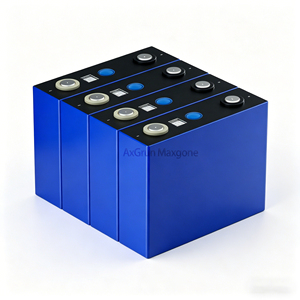
| LFP Battery Transition (LiFePO4) | Shift away from standard NMC towards high thermal stability Lithium Iron Phosphate packs. | Multi-cell LFP packs (3.2V 75Ah Grade-A cells) integrated with smart BMS for extreme heat resistance. | Elimination of thermal runaway risk during hot, humid Kansai summers; 3x longer pack service life. |
| Commercial Fleet Decarbonization Mandates | Japanese corporate ESG targets driving 100% electrified last-mile logistics by 2030. | Heavy-duty cargo racks, dual-battery wiring harnesses, integrated canopy options. | Substantial reduction in fuel and maintenance overhead for Osaka parcel and food delivery operators. |
| Modular CKD/SKD Import Efficiency | Importers seeking to minimize shipping volume cost & local Japanese assembly duties. | Precision pre-wiring, standardized chassis bolt specs, simplified local assembly manuals. | Direct shipping into Osaka Port with 40ft container optimization reducing per-unit freight costs by up to 35%. |
A critical consideration for B2B buyers importing electric motorbikes into Osaka is long-term battery durability under seasonal extreme temperatures. Standard ternary lithium (NMC) batteries degrade rapidly when subjected to Osaka's intense summer asphalt temperatures exceeding 40°C. By contrast, our optional Lithium Iron Phosphate (LFP / LiFePO4) battery packs offer unparalleled thermal resistance, non-combustible safety architecture, and over 2,000 to 3,500 full charge cycles. This technology dramatically lowers total cost of ownership (TCO) for commercial fleet managers across Japan.
Clear answers on Japanese vehicle compliance, shipping logistics, OEM customization options, and after-sales support protocols.
Direct factory manufacturing, transparent quality assurance, and dedicated OEM engineering for long-term commercial success.
Unlike trading intermediaries, we control the complete production lifecycle—from automated frame robotic welding and anti-corrosion dip coating to dynamic chassis dynamometer testing and battery pack spot-welding. Every motorbike undergoes a 15-point electronic and mechanical quality inspection before crate packing.
Our power systems use advanced Field Oriented Control (FOC) vector sine-wave controllers. We customize throttle sensitivity, regenerative braking intensity (E-ABS), slope-hold torque assist, and top-speed limiters directly in firmware to suit specific Japanese city or suburban terrain profiles.
Battery reliability dictates EV success. We engineer customized battery enclosures with fire-retardant thermal barriers, nickel-plated copper busbars, and BMS systems with real-time temperature sensing cells to guarantee zero thermal incidents under extreme usage.
Export logistics require precision. Our professional export packaging uses heavy-duty steel wire frame cages wrapped in moisture-barrier film and 7-ply cardboard master cartons to ensure zero transit damage across international sea routes to Osaka Port.
Connect directly with our engineering and export team. Get custom OEM quotes, Japanese street-legal specifications, sample availability, and container shipping estimates for Osaka Port.